Anemia Market Summary
Anemia Insights and Trends
- Anemia is a major global public health concern, especially among young children and pregnant women. According to the WHO, an estimated 42% of children under five years of age and 40% of pregnant women worldwide are affected by anemia.
- Effective screening and timely treatment of anemia require an understanding of local conditions and risk factors, making accurate prevalence data important for better public health planning and intervention.
- Autoimmune hemolytic anemia (AIHA) is a rare condition, with an estimated incidence of about 1 to 3 cases per 100,000 people annually. In elderly patients, diagnosis and management can be more challenging because of reduced bone marrow reserve, diminished erythropoietin responsiveness, age-related immune senescence, and a higher prevalence of comorbidities.
- Warm autoimmune hemolytic anemia (wAIHA) is a serious disorder in which pathogenic immunoglobulin G (IgG) autoantibodies target and destroy red blood cells. Current management primarily relies on broad immunosuppressive therapies that do not address the underlying disease mechanism and are not specifically approved as safe or effective treatments for wAIHA.
- According to a recent AGA Clinical Practice Update, ferrous sulfate is the preferred form of iron replacement because of its affordability. However, the guidelines indicate that no specific form of iron supplementation has demonstrated superior effectiveness.
- Although oral iron therapy is more accessible and less expensive than intravenous (IV) therapy, its effectiveness is often limited by poor adherence, inconsistent efficacy, and gastrointestinal adverse events (AEs), which can reduce patient confidence in treatment.
- Fanconi anemia is a rare genetic disorder associated with more than 20 genes and characterized by reduced production of all blood cell lineages due to bone marrow dysfunction. Management is primarily centered on hematopoietic stem cell transplantation (HSCT), which can cure bone marrow failure and hematologic malignancies, although it is not effective for all patients.
- Approximately 75% of Diamond-Blackfan anemia cases involve heterozygous mutations in ribosomal protein genes, classifying the condition as a ribosomopathy. Among these, RPS19 is the most frequently mutated gene.
- The latest ASH guidelines for severe aplastic anemia (SAA) recommend the addition of eltrombopag to standard immunosuppressive therapy to improve blood cell counts in both adults and children.
Anemia Market Size and Forecast in the 7MM
- 2025 Anemia Market Size: ~USD XXX million
- 2036 Projected HNSCC Market Size: ~USD XXX million
- Anemia Growth Rate (2026–2036): XX% CAGR
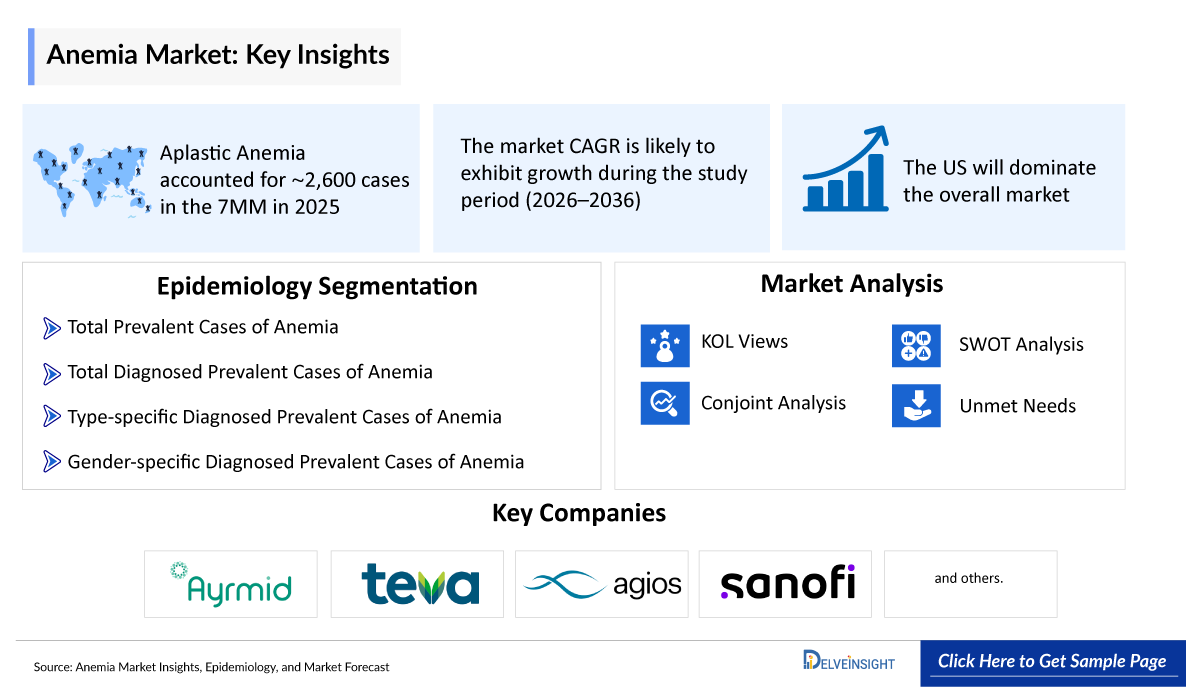
DelveInsight's ‘Anemia Market Insights, Epidemiology and Market Forecast – 2036’ report delivers an in-depth understanding of the Anemia, historical and forecasted epidemiology, as well as the Anemia market trends in the United States, EU4 (Germany, Spain, Italy, and France) and the United Kingdom, and Japan.
The Anemia market report delivers a comprehensive analysis of the current treatment landscape, including standards of care, clinical practices, and evolving therapeutic algorithms. It evaluates Anemia patient burden trends, revenue & market share dynamics, peak patient share & therapy uptake analysis, and provides an in-depth market size assessment and growth rate projections (Historical & Forecast 2022–2036) across global regions. The report highlights key unmet medical needs in Anemia and maps the competitive and clinical landscape to uncover high‑value opportunities, providing a clear outlook on future market growth potential.
|
Study Period |
2022–2036 |
|
Historical Year |
2022–2025 |
|
Forecast Period |
2026–2036 |
|
Base Year |
2026 |
|
Geographies Covered |
|
|
Anemia Market CAGR (Forecast period) |
∼XX% (2022 ̶ 2036) |
|
Anemia Epidemiology Segmentation Analysis |
Patient Burden Assessment
|
|
Anemia Companies |
|
|
Anemia Therapies |
|
|
Anemia Market |
Segmented by
|
|
Analysis |
|
Key Factors Driving the Anemia Market
- Treatment innovation is shifting care toward IV iron and new oral mechanisms
The market is being reshaped by the limits of oral iron and the growing use of parenteral options. FDA labeling for INJECTAFER and MONOFERRIC specifically targets patients who are intolerant of oral iron or who have an unsatisfactory response, showing how often oral therapy is insufficient in real-world practice. On the Chronic Kidney Disease (CKD) side, oral HIF-PH inhibitors are widening the treatment arsenal and supporting a shift away from transfusion dependence. On the iron-deficiency side, the FDA’s expanded indications for injectable iron across CKD, oral-iron intolerance, and other high-need groups are steadily broadening the treated population.
- Large and persistent untreated burden
Anemia continues to generate a broad treatment base because the global burden remains substantial, with WHO estimating that 40% of children 6–59 months, 37% of pregnant women, and 30% of women aged 15–49 are affected. WHO also attributes about 50 million healthy life years lost to anemia, with dietary iron deficiency among the leading causes.
Anemia Understanding and Treatment Algorithm
Anemia Overview and Diagnosis
Anemia is a condition marked by a lower-than-normal number of red blood cells or haemoglobin, reducing the blood’s ability to carry oxygen to tissues. It disproportionately affects women and children and, in severe cases, can impair cognitive and motor development in children and lead to complications for pregnant women and their babies. The condition arises from multiple factors, including poor nutrition, infections, chronic diseases, heavy menstrual bleeding, pregnancy-related issues, and genetic predisposition, though iron deficiency remains the most common cause.
Anemia is diagnosed through clinical evaluation and laboratory tests. Doctors assess symptoms such as fatigue, weakness, pale skin, shortness of breath, and dizziness, along with medical history, diet, menstrual patterns, and chronic illnesses, while physical examination may reveal signs like pallor or rapid heartbeat. Confirmation is mainly done through a complete blood count (CBC), which measures hemoglobin, red blood cell count, and hematocrit, with low hemoglobin being the key indicator; red cell indices also help identify the type of anemia. Additional tests, including iron studies, vitamin B12 and folate levels, and reticulocyte count, help determine the underlying cause, while further investigations such as stool tests, kidney function tests, or screening for chronic diseases may be needed in some cases. Identifying the root cause is essential because treatment focuses not only on correcting anemia but also on addressing the underlying condition.
Further details are provided in the report.
Anemia Treatment
Treatment of anemia depends on its cause, severity, and the patient’s overall health. Iron deficiency anemia (IDA) is usually treated with iron supplements and dietary changes to increase iron intake, while vitamin C may improve absorption; intravenous iron may be used when oral iron is ineffective or not tolerated. Anemia caused by vitamin B12 or folate deficiency is treated with supplements or injections, whereas anemia linked to chronic diseases requires management of the underlying condition, sometimes using therapies that stimulate red blood cell production. In severe cases, blood transfusions may be necessary to stabilize the patient. Addressing contributing factors such as heavy menstrual bleeding, infections, or poor nutrition is also important, as effective treatment focuses on both relieving symptoms and correcting the underlying cause to prevent recurrence.
Further details related to country-based variations are provided in the report.
Anemia Unmet Needs
The section “unmet needs of Anemia” outlines the critical gaps between the current state of patient care, diagnosis, and the ideal & effective management of the disease. It highlights the obstacles experienced by patients, clinicians, and researchers and identifies potential solutions for future progress.
- Diagnostic gaps due to unreliable biomarkers in inflammatory states
- Treatment fragmentation across iron, ESA, and emerging modalities
- Inflammation-driven iron dysregulation remains poorly addressed
- Adherence challenges with chronic, multi-step treatment regimens, and others…..
Comprehensive unmet needs insights in Anemia and their strategic implications are provided in the full report.
Anemia Epidemiology
Key Findings from Anemia Epidemiological Analysis and Forecast
- Globally, it is estimated that ∼40% of all children aged 6–59 months, ∼37% of pregnant women and ∼30% of women 15–49 years of age are affected by anemia.
- Iron deficiency remains the leading cause of anemia globally, accounting for roughly half of all cases. It disproportionately affects women under the age of 50, who represent the most impacted population group.
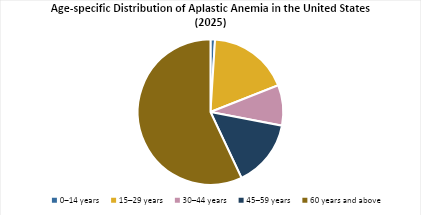
- Aplastic Anemia accounted for ∼2,600 cases in the 7MM in 2025.
- Anemia prevalence was lowest in children ages 2–11 (∼5%) and highest in adults 60 and older (∼13%).
- Japan accounted for approximately 12 million cases of IDA in 2025.
Anemia Drug Chapters & Competitive Analysis
The Anemia drug chapter provides a detailed, market-focused review of approved therapies and the emerging pipeline across Phase I–III clinical trials. It covers the mechanism of action, clinical trial data, regulatory approvals, patents, collaborations, and strategic partnerships for each therapy, along with their advantages, limitations, and recent developments. This section offers critical insights into the Anemia treatment landscape, supporting market assessment, competitive analysis, and growth forecasting for the Anemia therapeutics market.
Approved Therapies for Anemia
Omidubicel (OMISIRGE): Ayrmid (Gamida Cell)
Omidubicel is the first HSCT therapy for patients with severe aplastic anemia (SAA). The therapy is indicated for adults and children aged six years and older who lack a compatible stem cell donor and undergo reduced-intensity conditioning. It was approved by the US FDA in December 2025. Omidubicel addresses the limitations of umbilical cord blood (UCB) as a source including delayed hematopoietic recovery and increased infections and provides additional graft options for patients with SAA who need HSCT.
Eltrombopag choline (ALVAIZ): Teva Pharmaceuticals
Eltrombopag choline is an oral thrombopoietin (TPO) receptor agonist that works to increase platelet production by interacting with the transmembrane domain of the human TPO-receptor to initiate signaling cascades that induce proliferation and differentiation of megakaryocytes. In November 2023, the US FDA approved ALVAIZ for the treatment of certain forms of thrombocytopenia and SAA. ALVAIZ has been approved for ITP, Thrombocytopenia with Hep C, and SAA.
|
Table 1: Competitive Landscape of Marketed/Approved Therapies | ||||||
|
Drug/Therapy |
Company |
Indication |
Molecule Type |
RoA |
MoA |
Year of Approval |
|
Omidubicel (OMISIRGE) |
Ayrmid |
SAA |
Hematopoietic stem cell transplant Therapy |
Intravenous |
Provides donor hematopoietic stem cells to restore blood cell production |
US: 2025 |
|
Eltrombopag choline (ALVAIZ) |
Teva Pharmaceuticals |
SAA |
Small molecule |
Oral |
Thrombopoietin (TPO) receptor agonist |
US: 2023 |
Note: Detailed marketed therapies assessment will be provided in the final report.
Emerging Therapies for Anemia
Rilzabrutinib (WAYRILZ): Sanofi
Rilzabrutinib is the first BTK inhibitor for immune thrombocytopenia (ITP) that helps address the root cause of disease through multi-immune modulation. This innovative therapy is approved in the US for adults with persistent or chronic ITP who have had an insufficient response to a previous treatment. Rilzabrutinib is being studied across a variety of rare diseases, including wAIHA, IgG4-RD, and SCD. These additional indications are currently under investigation and have not been approved by regulatory authorities.
CK0801: Cellenkos
CK0801 is a first-in-class, allogeneic, cord blood-derived T-regulatory cell product, developed from Cellenkos' proprietary manufacturing platform that overcomes immune dysfunction by inhibiting key drivers of inflammation. CK0801 contains robust regulatory T-cells derived from healthy donor cord blood units. The drug CK0801 is currently undergoing evaluation in the Phase I clinical trial.
|
Table 2: Competitive Landscape of Emerging Drugs | |||||||
|
Drug Name |
Company |
Highest Phase |
Indication |
RoA |
MoA |
Molecule Type |
Anticipated Launch in the US |
|
Rilzabrutinib |
Sanofi |
III |
wAIHA |
Oral |
Bruton’s tyrosine kinase (BTK) inhibitor |
Small molecule |
Information is available in the full report |
|
Roxadustat |
Astellas |
III |
Anemia in pediatric participants with chronic kidney disease |
Oral |
Hypoxia-inducible factor prolyl hydroxylase (HIF-PH) inhibitor |
Small molecule |
information is available in the full report |
|
CK0801 |
Cellenkos |
I |
Aplastic Anemia |
Infusion |
Allogeneic cord blood-derived regulatory T cell (Treg) therapy modulating immune response |
Cell therapy |
information is available in the full report |
|
Note: Launch insights are provisional and may change with future report updates or the occurrence of major key catalysts. | |||||||
Note: A detailed emerging therapies assessment will be provided in the final report
Anemia Key Players, Market Leaders and Emerging Companies
- Ayrmid
- Teva Pharmaceuticals
- Agios Pharmaceuticals
- Sanofi
- Astellas
- Johnson & Johnson
- Cellenkos, and others
Anemia Drug Updates
- In April 2026, Johnson & Johnson announced that the US FDA granted Priority Review to the supplemental Biologics License Application (sBLA) for nipocalimab (IMAAVY), confirming the urgent need for treatment options in wAIHA.
- In February 2026, Sanofi announced rilzabrutinib, was granted Breakthrough Therapy Designation (BTD) by the US FDA for the treatment of patients with wAIHA. The Japanese Ministry of Health, Labour and Welfare has also provided rilzabrutinib an Orphan Designation (ODD) for the same condition.
- In February 2026, Ayrmid announced presentation of additional positive results for OMISIRGE in treating SAA at TANDEM 2026.
- In December 2025, the US FDA approved Mitapivat for the treatment of anemia in adults with alpha- or beta-thalassemia. With this approved indication, Mitapivat becomes the only FDA-approved medicine for anemia in both non-transfusion-dependent and transfusion-dependent alpha- or beta-thalassemia.
- In April 2025, Cellenkos announced that the US FDA had granted ODD to its novel cell therapy product, CK0801. Cellenkos was planning for a registration trial of CK0801 in H2 2025.
Drug Class Insights
Anemia Market Outlook
The Anemia therapeutics market has evolved from a largely supportive care driven space into a mechanism driven, innovation led segment of hematology. Historically, management relied on nutritional supplementation and transfusion based approaches, particularly oral iron and blood transfusions, which primarily addressed symptoms rather than underlying disease biology. The introduction of erythropoiesis stimulating agents marked a major breakthrough, establishing a biologic backbone for Anemia management in chronic kidney disease and oncology settings, and they continue to remain a standard of care due to strong clinical familiarity. Over time, the market matured with incremental innovations such as improved intravenous iron formulations, although safety concerns and biosimilar competition created pricing and utilization pressures in these legacy segments.
In the past decade, the market has shifted toward targeted therapies with distinct mechanisms of action. The emergence of HIF PH inhibitors introduced oral alternatives that stimulate endogenous erythropoietin production through hypoxia signalling pathways, expanding treatment options beyond injectable therapies. In parallel, erythroid maturation agents such as luspatercept have redefined treatment in conditions characterized by ineffective erythropoiesis, particularly in myelodysplastic syndromes and beta thalassemia. More recently, gene and cell therapies have begun to reshape the landscape by offering potential curative approaches for hereditary anemia’s, signalling a transition from chronic management to long term disease modification.
- The Iron Deficiency anemia market size is anticipated to cross USD 2 billion in the 7MM by 2036.
- The aplastic anemia market is projected to decline from 2026 onward, driven by the anticipated entry of generic versions of PROMACTA.
- Glucocorticosteroids, despite being commonly used, may lose effectiveness over time, particularly in patients who become non-responsive to long-term treatment. Moreover, long-term or high-dose therapies with glucocorticosteroids can lead to a range of adverse effects, including osteoporosis, skin atrophy, diabetes, abdominal obesity, glaucoma, cataracts, avascular necrosis and infection, growth retardation, and hypertension.
- Treatment for SAA in the elderly is uncertain, considering both illness characteristics and the patient’s health to minimize treatment-related risks. Hematopoietic cell transplantation (HCT) is often a second-line choice for elderly SAA patients.
- Recent advances in gene therapy, particularly lentiviral vector–based approaches, offer promising potential for diamond blackfan anemia by delivering functional copies of mutated genes into patients’ cells. Ongoing research, including CRISPR/Cas9 gene editing strategies, aims to correct the underlying genetic defects driving the disease.
Further details will be provided in the report….
Drug Class/Insights into Leading Emerging and Marketed Therapies in Anemia (2022–2036 Forecast)
The current anemia treatment landscape is largely driven by therapeutic classes including small molecules, hematopoietic stem cell transplantation (HSCT), BTK inhibitors, TPO receptor agonists, pyruvate kinase activators, and HIF-PH inhibitor–based approaches.
Thrombopoietin (TPO) receptor agonists such as Eltrombopag choline activate the c-Mpl (TPO) receptor on hematopoietic stem and progenitor cells in the bone marrow, stimulating cell proliferation and differentiation. In disorders such as SAA, this activation enhances trilineage hematopoiesis, increasing the production of red blood cells, white blood cells, and platelets. The resulting improvement in erythropoiesis can help correct anemia by restoring bone marrow function and increasing hemoglobin levels.
Pyruvate kinase activators such as mitapivat allosterically enhance the activity of red blood cell pyruvate kinase, a key enzyme in glycolysis. Increased enzyme activity boosts ATP production within erythrocytes, improving red blood cell energy balance, membrane integrity, and survival. In hemolytic and ineffective erythropoietic disorders such as thalassemia, this mechanism reduces red blood cell destruction and supports more effective erythropoiesis, leading to increased hemoglobin levels and reduced transfusion burden.
Further details will be provided in the report….
Anemia Drug Uptake
This section focuses on the uptake rate of potential drugs expected to be launched in the market during the forecast period (2026–2036). The analysis covers the Anemia market's uptake by drugs, patient uptake by therapy, and sales of each drug.
Further detailed analysis of emerging therapies' drug uptake in the report…
Market Access and Reimbursement of Anemia
- The United States
The report further provides detailed insights on the country-wise accessibility and reimbursement scenarios, cost-effectiveness scenario of approved therapies, programs making accessibility easier and out-of-pocket costs more affordable, insights on patients insured under federal or state government prescription drug programs, etc.
|
Table 3: The US Reimbursement for Anemia Therapies | |
|
Drug |
Access Program |
|
ALVAIZ |
ALVAIZ Savings Card |
Reimbursement is a crucial factor that affects the drug’s access to the market. Often, the decision to reimburse comes down to the price of the drug relative to the benefit it produces in treated patients. To reduce the healthcare burden of these high-cost therapies, many payment models are being considered by payers and other industry insiders.
Further details are provided in the final report….
Anemia Therapies Price Scenario & Trends
Pricing and analogue assessment of Anemia therapies highlights evolving price dynamics structures. This section summarizes the cost of approved treatments, closest and most appropriate analogue selection for emerging therapies, and understanding of how pricing influences market access, adherence, and long-term uptake.
The Cost of Therapy is INDICATIVE and will be provided in the updated report...
Industry Experts and Physician Views for Anemia
To keep up with Anemia market trends, we take Key Opinion Leaders (KOLs) and Subject Matter Experts (SMEs) opinions working in the domain through primary research to fill the data gaps and validate our secondary research. Industry experts were contacted for insights on the Anemia emerging therapies, evolving treatment landscape, patient adherence to conventional therapies, therapy switching trends, drug adoption and uptake, accessibility challenges, and epidemiology and real-world prescription patterns in Anemia, including MD, PhD, Instructor, Postdoctoral Researcher, Professor, Researcher, and others.
DelveInsight’s analysts connected with 10+ KOLs to gather insights; however, interviews were conducted with 6+ KOLs in the 7MM. Centers such as the Düsseldorf Clinics Association, Hirosaki University, University Hospital Ulm, University of California, Harvard University, Kyoto University, and Tennessee State University, etc. were contacted. Their opinion helps understand and validate current and emerging Anemia therapies, highlight unmet medical needs, provide epidemiological context, and support strategic decisions for market access, therapy adoption, and pipeline prioritization in Anemia.
|
Region |
Key Opinion Leaders (KOLs) and Subject Matter Experts (SMEs) |
|
United States |
“Diamond Blackfan Anemia is a genetic condition present from birth and cannot be prevented. For individuals with diamond blackfan anemia planning to conceive, consulting a genetic counselor or reproductive specialist is highly recommended to navigate potential risks and make informed decisions about family planning.” |
|
Germany |
“The diagnosis of pAA is difficult because pregnancy causes physiologic hematological alterations in the total blood count, which can conceal the condition. Meticulous monitoring and appropriate support therapy provided by a trained multidisciplinary team have the potential to improve outcomes for women and their newborns. All women should have frequent exams to maximize their care during pregnancy and after birth, and decisive therapy should be provided.” |
Qualitative Analysis: SWOT and Conjoint Analysis
We perform qualitative and market Intelligence analysis using various approaches, such as SWOT analysis and conjoint analysis.
In the SWOT analysis of Anemia, strengths, weaknesses, opportunities, and threats in terms of disease diagnosis, patient awareness, patient burden, competitive landscape, cost-effectiveness, and geographical accessibility of therapies are provided.
Conjoint analysis analyzes emerging therapies based on relevant attributes such as safety, efficacy, frequency of administration, route of administration, and order of entry. Scoring is given based on these parameters to analyze the effectiveness of therapy.
The team of analysts analyzes promising emerging therapies based on relevant attributes such as safety, efficacy, frequency of administration, route of administration, and order of entry. In efficacy, the trial’s primary and secondary outcome measures are evaluated, whereas the therapies’ safety is evaluated, wherein the acceptability, tolerability, and adverse events are majorly observed. In addition, the scoring is also based on the route of administration, order of entry, probability of success, and the addressable patient pool for each therapy. According to these parameters, the final weightage score and the ranking of the emerging therapies are decided.
Scope of the Report
- The report covers a segment of key events, an executive summary, a descriptive overview of Anemia, explaining its causes, signs and symptoms, pathogenesis, and currently available treatments.
- Comprehensive insight has been provided into the epidemiology segments and forecasts, the future growth potential of the diagnosis rate, and disease progression along treatment guidelines.
- Additionally, an all-inclusive account of both the current and emerging treatments, along with the elaborative profiles of late-stage and prominent therapies, will have an impact on the current treatment landscape.
- A detailed review of the Anemia market, historical and forecasted market size, market share by therapies, detailed assumptions, and rationale behind our approach is included in the report, covering the 7MM drug outreach.
- The report provides an edge while developing business strategies by understanding trends through SWOT analysis and expert insights/KOL views, patient journey, and treatment preferences that help in shaping and driving the 7MM Anemia market.
Report Insights
- Anemia Patient Population Forecast
- Anemia Therapeutics Market Size
- Anemia Pipeline Analysis
- Anemia Market Size and Trends
- Anemia Market Opportunity (Current and Forecasted)
Report Key Strengths
- Epidemiology‑based (Epi‑based) Bottom‑up Forecasting
- Artificial Intelligence (AI)-enabled Market Research Report
- 11-year Forecast
- Anemia Market Outlook (North America, Europe, Asia-Pacific)
- Patient Burden Trends (by geography)
- Anemia Treatment Addressable Market (TAM)
- Anemia Competitive Landscape
- Anemia Major Companies Insights
- Anemia Price Trends and Analogue Assessment
- Anemia Therapies Drug Adoption/Uptake
- Anemia Therapies Peak Patient Share analysis
Report Assessment
- Anemia Current Treatment Practices
- Anemia Unmet Needs
- Anemia Clinical Development Analysis
- Anemia Emerging Drugs Product Profiles
- Anemia Market Attractiveness
- Anemia Qualitative Analysis (SWOT and Conjoint Analysis)
FAQs
Market Insights
- What was the Anemia market size, the market size by therapies, market share (%) distribution in 2025, and what would it look like by 2036? What are the contributing factors for this growth?
- What are the anticipated pricing variations among different geographies for the emerging therapies in the future?
- What can be the future treatment paradigm of Anemia?
- What are the disease risks, burdens, and unmet needs of Anemia? What will be the growth opportunities across the 7MM concerning the patient population with Anemia?
- Who is the major future competitor in the market, and how will the competitors affect their market share?
- What are the current options for the treatment of Anemia? What are the current guidelines for treating Anemia in the US, Europe, and Japan?
Reasons to Buy
- The report will help in developing business strategies by understanding the latest trends and changing treatment dynamics driving the Anemia market.
- Bottom-up forecasting builds from the affected population to product forecasts, delivering a robust, data-driven approach ideal for new therapies and novel classes.
- Insights on patient burden/disease incidence, evolution in diagnosis, and factors contributing to the change in the epidemiology of the disease during the forecast years.
- Understand the existing market opportunities in varying geographies and the growth potential over the coming years.
- Identifying strong upcoming players in the market will help devise strategies to help get ahead of competitors.
- Detailed analysis and ranking of class-wise potential current and emerging therapies under the conjoint analysis section to provide visibility around leading classes.
- To understand KOLs’ perspectives on the accessibility, acceptability, and compliance-related challenges of existing treatment to overcome barriers in the future.
- Detailed insights on the unmet needs of the existing market so that the upcoming players can strengthen their development and launch strategy.
- This Artificial Intelligence (AI)-enabled report summarize and simplify complex datasets within the report into clear, actionable insights for stakeholders, investors, and healthcare providers, enabling faster, data-driven decisions.